

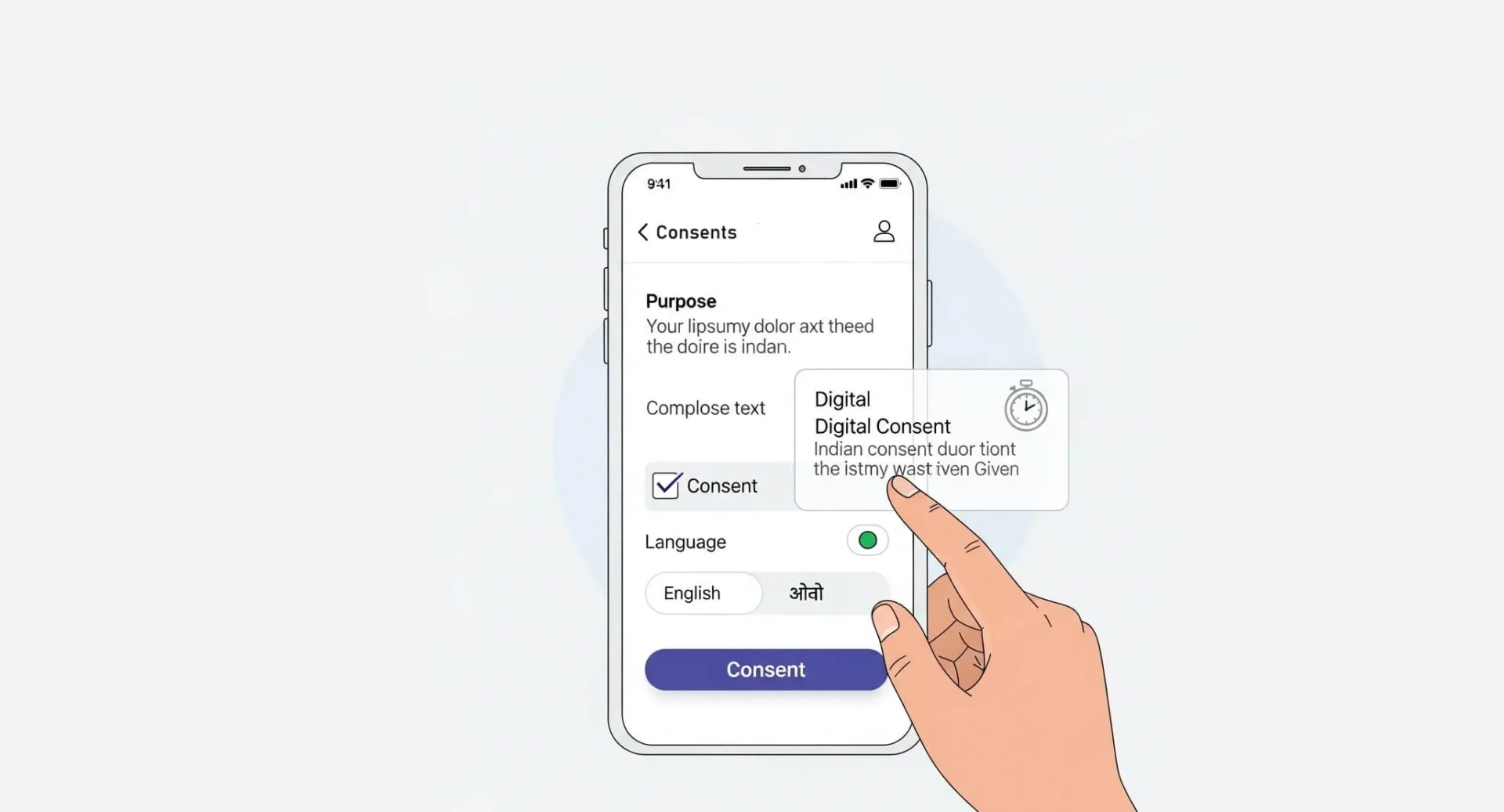
Effective consent management is the cornerstone of lawful personal data processing under modern data protection regimes, including India’s Digital Personal Data Protection Act (DPDPA), 2023. Consent is no longer a one-time checkbox but a living, auditable lifecycle that begins at collection and continues through use, renewal, withdrawal, and eventual termination. Organizations must therefore move beyond static consent capture toward a structured, verifiable, and enforceable consent governance model. Framework provided herein, outlines the essential operational, technical, and governance controls required to ensure that consent remains valid, purpose-bound, auditable, and regulator-ready throughout its lifecycle.
A. Consent Creation & Start of Validity
- Consent start date recorded – Exact date and time when consent was given is logged.
- Purpose clearly defined and stored – Each consent is tied to a specific, non-vague purpose.
- Notice version linked to consent – Which version of the privacy notice shown at the time of consent is stored.
- Language of consent captured – Record the language in which consent was presented and given.
- Affirmative user action recorded – Evidence of active consent (click, checkbox, OTP, signature, voice).
B. Consent Duration & Validity Controls
- Consent validity or review period defined – Consent includes an explicit expiry date or a review trigger.
- Ongoing necessity of purpose assessed – Purpose is periodically reviewed to confirm it is still relevant.
- Consent not treated as perpetual by default – No consent remains valid indefinitely without justification.
- Consent scope clearly documented – Whether consent is one-time, recurring, or continuous is recorded.
C. Consent Monitoring & Enforcement
- Automated checks before processing – Systems verify consent validity before any data processing occurs.
- Processing blocked after expiry – Data processing automatically stops when consent expires.
- Consent state tracked – Consent lifecycle states such as active, expired, revoked, or superseded are maintained.
- Consent misuse detection in place – Alerts when data is accessed or used outside valid consent.
D. Consent Renewal & Re-Consent
- Re-consent triggered on purpose change – Fresh consent is collected when purposes change or expand.
- Periodic consent refresh for long-term processing – Long-running use cases have defined re-consent intervals.
- Re-consent linked to updated notice – Updated privacy notices are shown during re-consent.
- Old consent superseded and archived – Previous consents are preserved for audit but marked inactive.
E. Withdrawal & Expiry Handling
- Easy withdrawal mechanism available – Users can withdraw consent as easily as they gave it.
- Withdrawal timestamp recorded – Date and time of withdrawal are logged.
- Immediate processing cessation on withdrawal – Processing stops without delay for withdrawn purposes.
F. Retention & Post-Validity Controls
- Data retention aligned with purpose completion – Data is deleted or anonymized once purpose ends.
- Consent records retained for legal defense only – Consent artifacts are retained only as long as legally required.
- Retention policy for expired consent defined – Clear rules exist for deleting obsolete consent records.
G. Audit & Regulatory Readiness
- Consent replay capability available – Ability to reconstruct what the user saw at the time of consent.
- Tamper-evident consent artifacts – Cryptographic hashing or signatures ensure integrity.
- Exportable consent evidence – Consent records can be produced in machine-readable formats.
- DPBI inquiry readiness – Evidence can answer: When was consent given? Is it still valid? Why is processing ongoing?
H. Governance & Accountability
- Consent internal ownership defined – Clear internal owner for consent lifecycle management.
- Data Principal Mapping- Who is data principal that has given the consent their identifier, digital signature and other specifics like child, parental, nominee etc.
- Consent Attestation Information – Cryptographic hash that proves interoperability, legal provenance and also enables third party verification of consent status and interoperability across.
Together, these controls establish consent as a continuously governed legal instrument rather than a one-time compliance formality. By embedding consent validity checks, renewal mechanisms, auditability, and accountability into core data operations, organizations can demonstrate genuine compliance with DPDP principles of purpose limitation, data minimization, and user autonomy. More importantly, this approach positions consent management as a trust-enabling capability—one that withstands regulatory scrutiny, supports scalable digital services, and aligns organizational data practices with evolving privacy expectations.